
Physical quantities are the features that the universe and objects in the universe have.
Examples: Distance, Time, Velocity, Mass, Energy, and Temperature.
These quantities with many others describe our universe and predict the results of events because they interact with one another through very precise mathematical formulas.
Instead of saying very light or very heavy or so hot. We need to make physics as much objective as possible and that’s why we measure these quantities.
Measuring length, volume and time
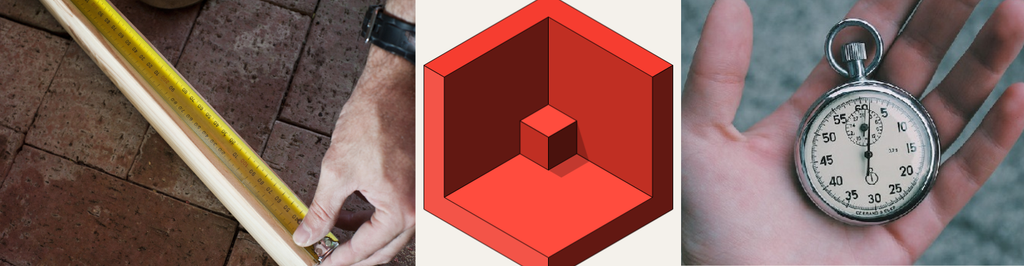
We’re learning how to measure 3 of these physical quantities and the errors that could happen during measurement and how to avoid them.
Length
How to measure it
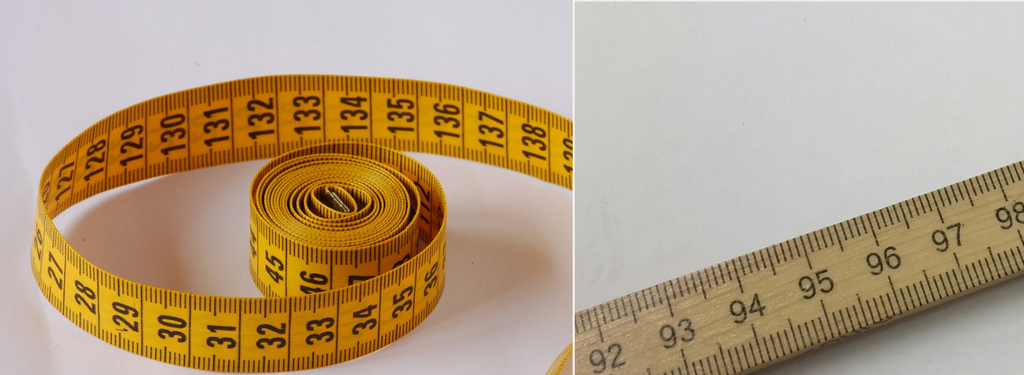
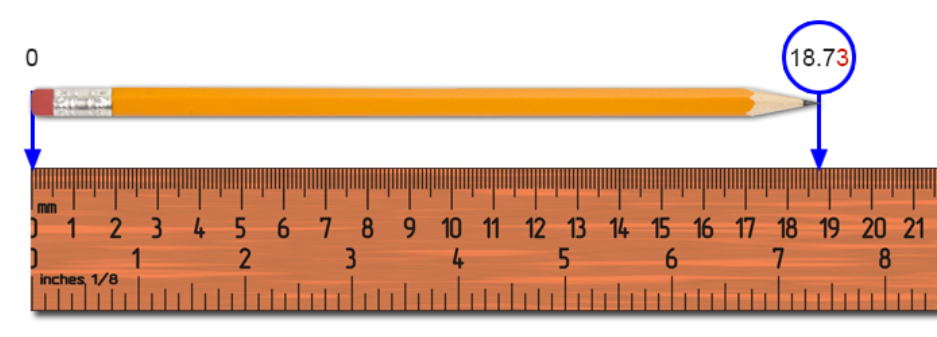
We use a ruler, rule or a measuring tape Align the object’s starting edge with the ruler’s zero mark, not its physical end.
Common errors when measuring
The most common error when measuring length is the parallax error.
Why it happens:
You look at the ruler at an angle. This makes the object’s end appear to line up with a different mark than it actually does, leading to an incorrect reading.
Solution:
Take readings at eye level.
Volume
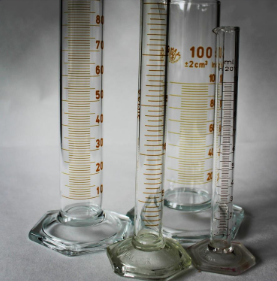
A measuring cylinder is used to measure the volume of an irregular object via water displacement.
For regular objects we usually have formulas that we can use to calculate volume. However, a measuring cylinder would still work.
How to measure it
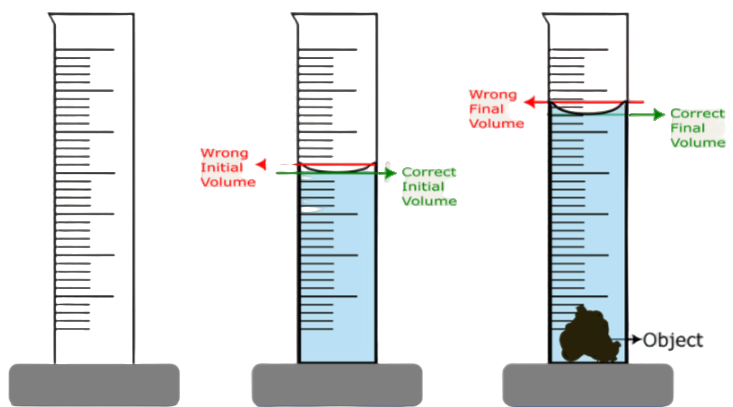
Place the measuring cylinder on a flat surface and read the bottom of the meniscus at eye level.
To find the volume of an irregular object, use the displacement method:
Pour water into the measuring cylinder and record the initial volume.
Carefully lower the object into the water and record the final volume.
Volume of the object = Final volume – Initial volume.
Common errors when measuring
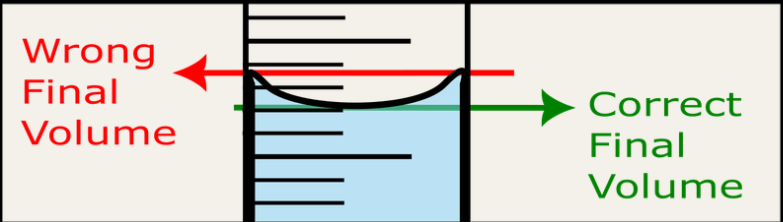
Taking the reading from the top of the meniscus instead of the bottom of the meniscus.
Why it happens:
The edges of the water surface rise slightly along the inside of the tube, forming a concave meniscus.
Solution
Take readings at the bottom of the meniscus.
Time
How to measure it
We use a clock, a stopwatch, or a timer with other devices to automate the process.
Analogue Clocks
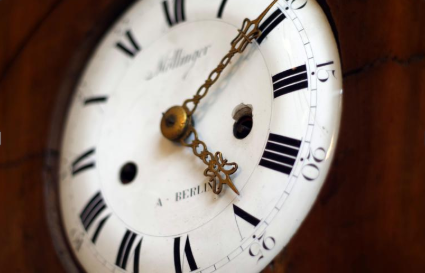
Analogue clocks are used for longer durations like minutes and hours.
An analogue clock uses rotating hands to show time while a digital one displays numbers on an electronic screen.
Stopwatch
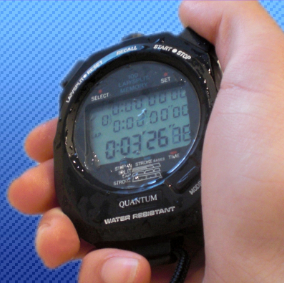
Used to measure the time taken for events such as pendulum swings, reaction times, and falling objects.
Digital stopwatches give accurate measurements, often to 0.01 s or better.
Start the stopwatch when the event begins and stop it when the event finishes. A quick reaction time helps reduce errors. You must be fast.
Determine an average value for a small distance and for a short interval of time You can skip these two pages.
The methods that we discussed so far to measure length and time doesn’t work for small distances and time intervals or at least they need a tweak.. Why?
It takes time to see, process and press start/stop. The brain needs time to go through the whole process. It’s called reaction time and it takes on average 250 milliseconds 0.25s. So, if you measure an event like a pendulum swing which can take 1s .. the reading could be off by 0.5 s that’s a 50% error! If You’re measuring a very tiny thickness like that of a paper. The thickness is a fraction of a millimeter. In this case the ruler will be impractical since it’s not marked in parts of a millimeter. Even the marks representing millimeters on the ruler could have a thickness that is bigger than that of a paper.
Determine an average value for a small distance and for a short interval of time
Let’s say we have two measurements:
The building is 15 m, give or take 1 m (100 cm). The pen is 15 cm, give or take 5 cm.
Which measurement do you think is more reliable?
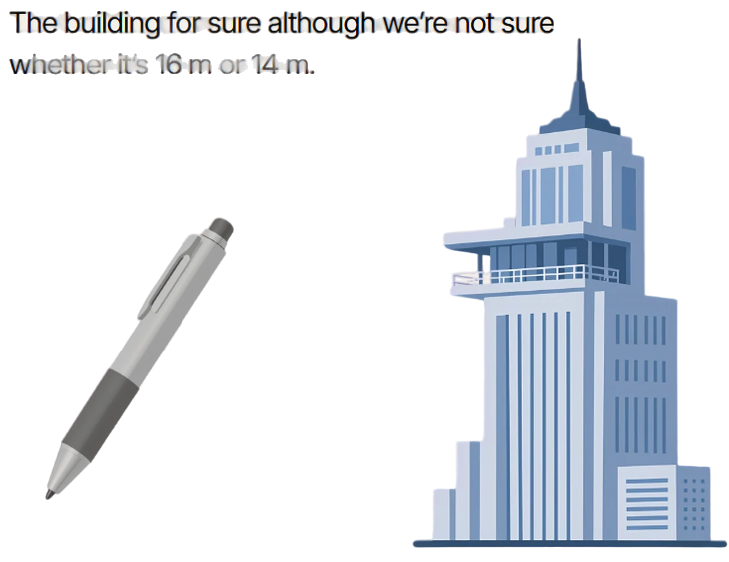
The building for sure although we’re not sure whether it’s 16 m or 14 m.
Determine an average value for a small distance and for a short interval of time.
When measuring small distances or small time intervals like the thickness of a paper or a pendulum swing, we measure the thickness of 500 sheets or we measure the time for 20 swings for example. This way the expected error due to the limitations in our measuring device “ruler” or reaction time will have a negligible effect on the measurment. We then devide the length that we measured over the number of sheets to get the thickness of one sheet. We devide the time it took the pendulum to make 20 swings over the number of swings which is 20 to get the time of one swing.
A good idea to improve the accuracy of the measurement is to take multiple readings and then find the average of these readings. This reduces random error. For example timing 20 swings we may measure 21 seconds for 20 swings. Time of one swing “Period of a Pendulum” = 22/20 = 1.1 seconds Now we repeat “timing another 20 swings” It may take a bit longer or slower let’s say 19 seconds .. Time of one swing = 19/20 = 0.95 second and one more time we may get time of one swing = 1.05 seconds.
Finally we take the average = (1.1+0.95+1.05)/3 = 1.03 seconds The time of one swing is 1.03 seconds.
To measure the thickness of one sheet of paper: We measure the thickness of, let’s say, 500 sheets. Suppose it is 5 cm. Then, the thickness of one sheet of paper is: That’s one- tenth of a millimeter. You can’t measure it accurately with a ruler, but you can definitely measure 5 cm with reasonable accuracy. Please refer to my website to see how to do this along with many other concepts that will help you in your exam.
So far we talked about 3 physical quantities. But, there are many others that we deal with every day. To give a complete measurement of time for example we need

This is the case for many other quantities. The syllabus requires you to know these quantities: distance, speed, time, mass, energy and temperature need only a magnitude and in this case it’s a scalar quantity Of course a unit is necessary too.
Many other physical quantities require more than just a magnitude to fully define it. Think of push vs pull the door. You need to apply a force in your direction which is pull. Or away which is push. To fully measure or calculate a force we need a direction too.

Direction is necessary when measuring or calculating some physical quantities like force, weight, velocity, acceleration, momentum, electric field strength and gravitational field strength. These quantities are vector quantities.
To know more about these physical quantities please check my website.
Vector quantities can be represented in different ways.
Positive and negative directions
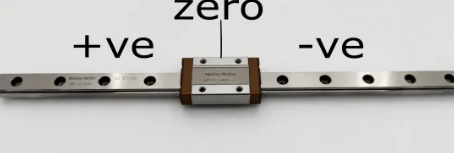
For linear motion “the motion of a carriage on a rail or the car on a highway maybe .. only forward and backward”, we can take one direction to be positive and the other to be negative.
So, if the carriage moves to the left the velocity and displacement are in the positive direction and vice versa.
Graphically.
For two dimensional motion. We can use an arrow to represent vectors graphically. The length of the arrow represents the magnitude of the vector “to scale”. The direction of the arrow represents the direction of the vector.
We use angles and words like up, down, left, right, north, south, east, …
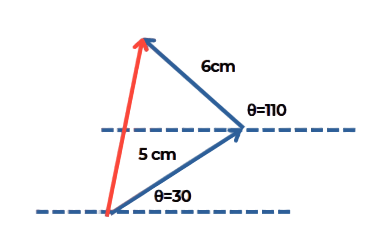
For example, the vector below could represent the velocity of a car moving at 50km/hr 30 degrees above East.. if 1cm=10km/hr

Adding vectors
Vectors can be added graphically

Tail to head.. you take one vector move it so that it’s tail begins at the head of the other vector.. or it ends with its at the tail “start of the other one” Maintain the same direction. The equivalent vector starts from the tail of the first to the head of the second.
For vectors at right angle
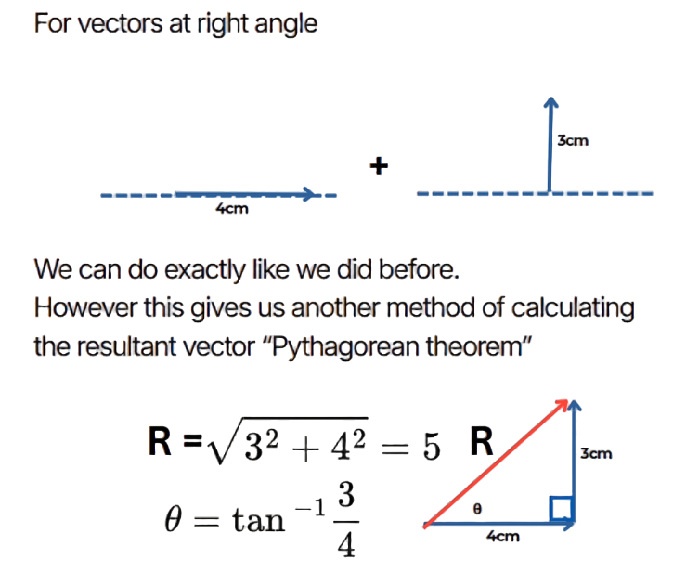
We can do exactly like we did before. However this gives us another method of calculating the resultant vector “Pythagorean theorem”
R=32+42=5R θ=tan−143